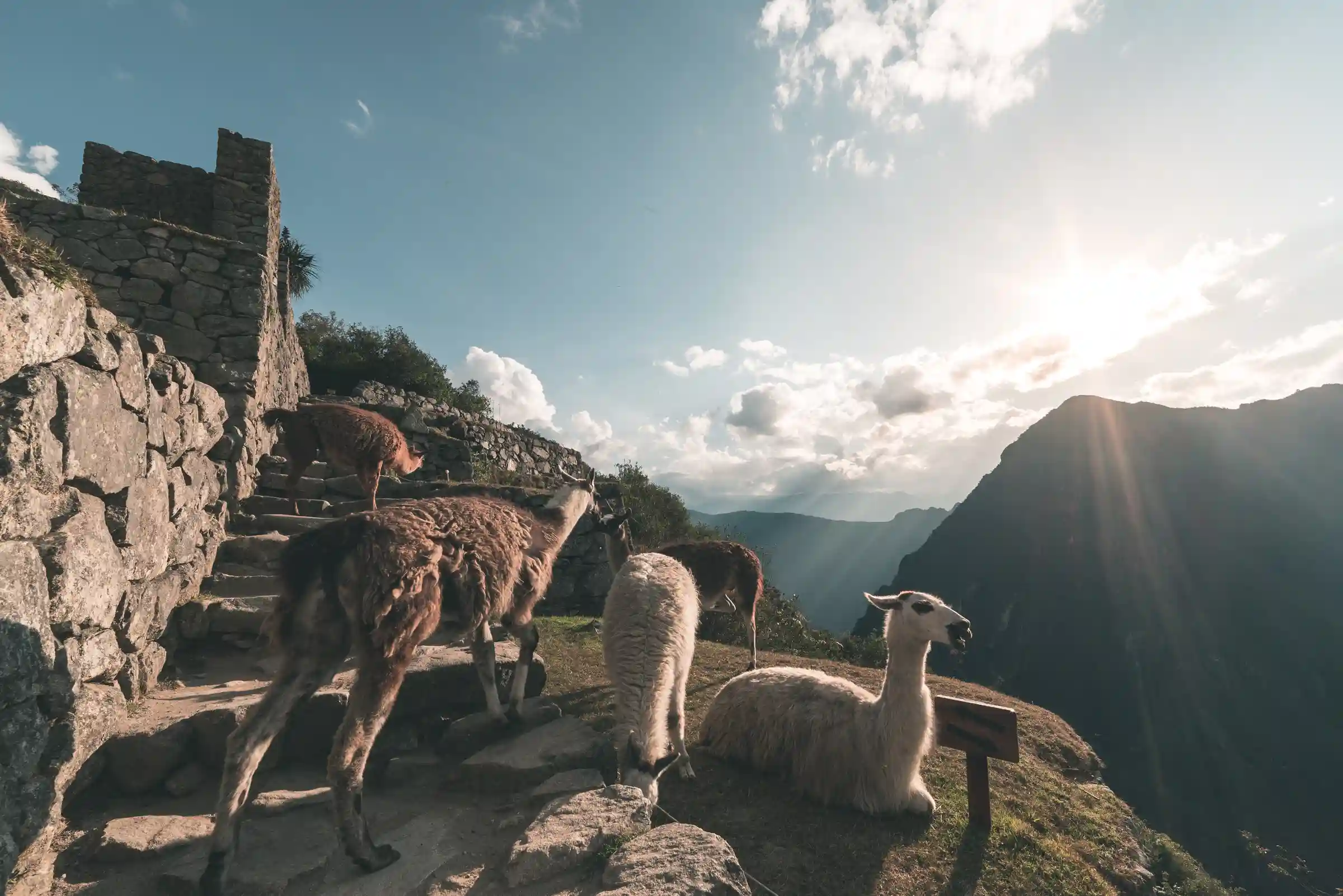
Luxury Cusco & Sacred Valley Tour 6 Days / 5 Nights

Book your next adventure at the best price.
Group Size
Min 2 Persons
Duration
Activity Type
Tour Cultural
Season
All Year
Food
Not included
Physical Level
Easy
Physical Level
Easy
Lodge/Hotel
Easy

Overview

The Luxury Cusco & Sacred Valley Tour is a 6-day, 5-night program that covers the most significant historical, natural, and cultural areas of the Cusco region in Peru. The tour includes the Inca archaeological sites of the Sacred Valley, the iconic Inca constructions of Machu Picchu, the colonial and pre-Columbian architectural mix of Cusco city, and the striking natural formation of Rainbow Mountain. Each day is fully organized with private transportation from MACHU PICCHU TEAM’s own fleet, expert multilingual guides, and carefully selected meals. A representative from MACHU PICCHU TEAM will be available at all times throughout the itinerary to ensure everything runs smoothly.

BEST TOUR OPTION
Price from $ 0.00 USD Per Person
s
  • Visit Machupicchu with a professional expert guide.
  • Enjoy a comfortable and safe journey with transport and trains.
  • Use your free time in Aguas Calientes to explore.
  • Make a quick and reliable booking with flexible payments.
  • Ask about essential items and optional services like hotels.

Overview

The city of Cusco is located at approximately 3,400 meters above sea level and served as the capital of the Inca Empire for several centuries. Today it holds a rare combination of Inca stone constructions and Spanish colonial architecture, most of it built during the 16th and 17th centuries on top of or directly adjacent to original Inca foundations. Walking through its streets means moving between 2 distinct historical periods simultaneously. The city is a UNESCO World Heritage Site and 1 of the most visited urban centers in South America.

Machu Picchu is the most recognized Inca construction in the world. Located at approximately 2,400 meters above sea level in the Urubamba Valley, the site covers 32,592 hectares and includes more than 150 structures: temples, terraces, plazas, and residential sectors built without the use of mortar or metal tools. UNESCO designated it a World Heritage Site in 1983. The site receives approximately 5,000 visitors per day during the high season between May and October. A visit to Machu Picchu on this tour does not require hiking any trail — the journey combines private road transportation with train service and a short uphill private transportation ride to reach the entrance of the Inca City.

The Sacred Valley of the Incas extends along the Urubamba River between Pisac and Ollantaytambo. During the Inca Empire, this valley was 1 of the most productive agricultural and strategic areas in the region. The Inca constructions of Ollantaytambo are among the best preserved in the Cusco region and give a clear picture of Inca urban planning and engineering. Moray, also in the Sacred Valley, presents a series of large circular agricultural terraces that researchers believe served as an experimental system for testing crops at different temperatures, given that the depth of the rings generates significant temperature differences between levels.

Peruvian cuisine is 1 of the most varied in the world and forms a central part of the country’s cultural identity. This tour includes a dedicated culinary experience in Cusco: a guided visit to San Pedro Market to identify and select local ingredients, followed by a 3-hour cooking class at a private studio. During this session, travelers prepare a 3-course meal based on traditional Andean and Peruvian recipes. All food provided throughout the tour is prepared using fresh, organic, locally sourced ingredients from regional farmers and markets. International gastronomy options are available at certain restaurants during the tour, which may involve additional costs; travelers can consult the MACHU PICCHU TEAM reservations team for specifics.

Rainbow Mountain, known in Quechua as Vinicunca, is a geological formation at 5,200 meters above sea level in the Cusco region. Its surface displays layers of different mineral deposits — iron oxides, clays, and sulfur compounds — which produce a range of colors including red, yellow, green, and purple. The hike to the summit starts from Chillca at 3,700 meters above sea level and covers approximately 3 kilometers of progressively rising terrain. Along the route it is possible to observe Andean wildlife, including wild Vicuñas — the smallest wild camelid in South America, whose fiber is among the most valuable natural fibers in the world.

The accommodation throughout this tour is at 5-star hotels. In Cusco, travelers stay at Inkaterra La Casona, a boutique hotel housed in a 16th-century Spanish mansion with 11 suites in the historic center of the city. In Aguas Calientes, the accommodation is at Inkaterra Machupicchu Pueblo, a hotel set within a cloud forest environment, a short walk from the train station. Both properties are part of the Inkaterra collection, known in the Peruvian highlands for their preservation work and sustainable practices.

MACHU PICCHU TEAM has designed this tour to deliver a complete experience that combines historical learning, cultural participation, and high-standard comfort. All transportation used throughout the tour belongs to MACHU PICCHU TEAM’s own fleet and is operated by experienced, trained drivers who know each route thoroughly. The guides assigned to this program are multilingual professionals with extensive knowledge of Andean history, local culture, and the specific routes included. Their experience leading travelers from different countries makes each explanation clear, relevant, and adapted to the group. At all times during the itinerary, a MACHU PICCHU TEAM representative will be in direct contact with the group to ensure the smooth progression of each activity and to address any unforeseen situations.

Trip details

  • Duration: 6 days / 5 nights
  • Starting point: Cusco city — Alejandro Velasco Astete International Airport
  • Ending point: Cusco city — Alejandro Velasco Astete International Airport
  • Maximum altitude: 5,200 m.a.s.l. / 17,060 ft.a.s.l. (Rainbow Mountain)
  • Minimum altitude: 2,400 m.a.s.l. / 7,874 ft.a.s.l. (Machu Picchu Inca City)
  • Accommodation category: 5-star hotels (Inkaterra La Casona, Cusco; Inkaterra Machupicchu Pueblo, Aguas Calientes)
  • Physical difficulty: Moderate to high — Cusco city tours are low effort; Machu Picchu is moderate; Rainbow Mountain requires good cardiovascular fitness
  • Language of service: English (other languages available on request; confirm with the MACHU PICCHU TEAM reservations team)
  • Transportation: Private agency-owned vehicles at all stages; train services for the Cusco–Aguas Calientes leg
  • Group size: Small groups (2 to 8 travelers) or private service for 1 traveler — see the Price section for details
  • Meals included: 7 meals across the 6 days — see the Inclusions section for the full breakdown
  • First aid support: First aid kit and oxygen bottle included throughout the tour
  • MACHU PICCHU TEAM representative: Available at all times during the itinerary for coordination and support

Trip Summary

Day 0: Welcome to Cusco

  • Arrival: Pickup at Alejandro Velasco Astete International Airport in Cusco by a MACHU PICCHU TEAM representative
  • Private transfer from airport to Inkaterra La Casona hotel in the historic center of Cusco
  • Rest of the day free — recommended for rest and altitude adjustment


Day 1: Cusco City Culinary Experience

  • 09:30 a.m.: Pickup from hotel in Cusco by MACHU PICCHU TEAM private transportation
  • Guided visit to San Pedro Market — culinary tour and ingredient selection
  • Transfer to private cooking studio — 3-hour hands-on Peruvian cooking class
  • Lunch served: the 3-course meal prepared during the class
  • Afternoon: guided walking tour of Cusco city — San Blas neighborhood, 12-angle stone, San Francisco Square, Plaza de Armas
  • Return to hotel by private transportation


Day 2: Ollantaytambo – Moray – Pachamama Ceremony

  • 08:00 a.m.: Pickup from hotel in Cusco by MACHU PICCHU TEAM private transportation
  • Drive to Ollantaytambo — approximately 1.5 hours
  • Guided tour of the Inca constructions and cobblestone streets of Ollantaytambo
  • Drive to Moray — approximately 45 minutes
  • Pachamama ceremony on the plains of Moray, led by an Andean priest
  • Picnic lunch — freshly prepared with local, organic ingredients, served outdoors in the Sacred Valley
  • Drive to Ollantaytambo train station
  • Board train to Aguas Calientes — passenger’s choice between Peru Rail (Vistadome) or Inca Rail (approximately 1.5 hours)
  • Check in at Inkaterra Machupicchu Pueblo in Aguas Calientes


Day 3: Machu Picchu

  • After breakfast at Inkaterra Machupicchu Pueblo: board private transportation to the entrance of Machu Picchu (approximately 25 minutes)
  • 2-hour guided tour of the Machu Picchu Inca City with MACHU PICCHU TEAM expert guide
  • Lunch at Belmond Sanctuary Lodge restaurant — located directly at the entrance of Machu Picchu
  • Free time in the afternoon — option to return to the site or explore Aguas Calientes town
  • Return to Aguas Calientes by private transportation
  • Board the Hiram Bingham luxury train from Aguas Calientes to Cusco
  • Private transfer from Cusco train station to hotel


Day 4: Cusco City

  • 09:00 a.m.: Pickup from hotel in Cusco by MACHU PICCHU TEAM private transportation
  • Visit to Cusco Cathedral at Plaza de Armas
  • Walking route from Plaza de Armas to Q’oricancha (Temple of the Sun)
  • Private transportation to Sacsayhuaman archaeological site (approximately 25-minute drive from city center)
  • Return to Plaza de Armas area for lunch
  • Free afternoon — no scheduled activities
  • Return to hotel


Day 5: Rainbow Mountain

  • 04:00 a.m.: Pickup from hotel in Cusco by MACHU PICCHU TEAM private transportation
  • 5-hour drive to Chillca trailhead (3,700 m.a.s.l. / 12,140 ft.a.s.l.) through high-altitude Andean plains
  • Breakfast at the trailhead — hot meal prepared by the MACHU PICCHU TEAM kitchen team
  • 4-hour hike from Chillca to the summit of Rainbow Mountain (5,200 m.a.s.l. / 17,060 ft.a.s.l.)
  • Time at the summit — photographs, hot drinks provided by MACHU PICCHU TEAM staff, views of Ausangate Peak
  • 2-hour descent back to Chillca trailhead
  • Hot lunch at the trailhead — prepared by the MACHU PICCHU TEAM kitchen team
  • Drive back to Cusco
  • 07:00 p.m. – 08:00 p.m.: Arrival at hotel in Cusco


Day 6: Airport Transfer

  • Breakfast at hotel
  • Private transfer from hotel to Alejandro Velasco Astete International Airport in Cusco — MACHU PICCHU TEAM’s own vehicle
  • End of tour

Itinerary

The tour begins with the arrival at Alejandro Velasco Astete International Airport in Cusco. A MACHU PICCHU TEAM representative will be waiting at the arrivals area with a name sign and will assist with the transfer to Inkaterra La Casona hotel in the historic center of the city. The transfer is done in a private vehicle from MACHU PICCHU TEAM’s own fleet.

Cusco is located at approximately 3,400 meters above sea level. It is normal for travelers arriving from lower altitudes to experience mild headache, fatigue, or slight shortness of breath during the first few hours. These symptoms typically ease within 24 to 48 hours as the body adjusts to the lower oxygen levels. It is advisable to rest upon arrival, drink plenty of water or coca leaf tea, and avoid heavy physical activity on the first day.

Please provide your flight arrival details — airline, flight number, and arrival time — to the MACHU PICCHU TEAM reservations team at the time of booking so the pickup can be arranged without delays. A MACHU PICCHU TEAM representative will review the schedule for the following days with you upon arrival at the hotel. The remainder of Day 0 is free.

At 09:30 a.m., a private vehicle from MACHU PICCHU TEAM’s own fleet will pick up travelers from their hotel. The driver is an experienced professional who knows the city’s routes well and will ensure punctual transfers throughout the day.

The first stop is San Pedro Market, located in the historic center of Cusco. This is 1 of the largest and most active markets in the city, where local vendors sell a wide range of fresh produce, grains, dried herbs, and regional specialty items. The MACHU PICCHU TEAM guide will lead the group through the different sections of the market, explaining the local products in detail — including the more than 3,000 varieties of native Andean potatoes, different types of native corn, quinoa in its various forms, and fresh herbs used in traditional Andean cooking. During this visit, travelers will also select the ingredients to be used in the cooking class that follows.

After the market visit, the group travels by private transportation to the cooking studio. The 3-hour session covers the preparation of a 3-course meal based on traditional Andean and Peruvian recipes. The class is hands-on from the beginning: the guide and kitchen instructor explain the techniques, the cultural background of each dish, and the specific characteristics of the local ingredients. All items used are fresh, organic, and sourced from local farmers and markets. At the end of the session, travelers sit down to eat the meal they prepared. International cuisine options are available at certain restaurants along the tour route and may involve additional costs; the MACHU PICCHU TEAM reservations team can provide specific guidance on request.

After lunch, the afternoon is dedicated to a guided walking tour of Cusco city. The first area is San Blas, 1 of the oldest neighborhoods in the city, known for its narrow streets, traditional artisan workshops producing ceramics and textiles, and the viewpoint overlooking the historic center. From San Blas, the tour continues to Hatunrumiyoc Street, where the famous 12-angle stone is embedded in the wall of what was originally an Inca palace. This single stone fits precisely against 12 surrounding blocks without mortar — a characteristic feature of Inca construction techniques. The route continues through San Francisco Square and ends at the Plaza de Armas, the main square of Cusco, surrounded by colonial churches and arcaded buildings. The MACHU PICCHU TEAM guide provides detailed explanations at each point throughout the tour. The return to the hotel is by private transportation.

At 08:00 a.m., private transportation from MACHU PICCHU TEAM picks up travelers from the hotel in Cusco. The drive to Ollantaytambo takes approximately 1.5 hours through the Sacred Valley. A MACHU PICCHU TEAM representative will be in contact throughout the journey to confirm conditions and the schedule.

Ollantaytambo is 1 of the best-preserved Inca urban centers in the Cusco region. The town has maintained its original Inca layout, with stone streets and water channels in continuous use since the 15th century. The Inca constructions on the hillside above the town include large stone terraces and a partially completed temple sector at the upper level. The MACHU PICCHU TEAM guide will provide a thorough explanation of the architectural details, the role of this site within the Inca Empire, and the historical events that took place here during the Spanish conquest in the 16th century. Travelers will receive a clear picture of the engineering capacity and organizational scale of the Inca civilization.

From Ollantaytambo, the group travels by private transportation to Moray. The site features large circular agricultural terraces arranged in concentric rings. The largest ring descends approximately 30 meters from the outermost level to the center, generating temperature differences of up to 15 degrees Celsius between the top and bottom tiers. Researchers have proposed that these conditions were used to simulate the growing environments of different agricultural zones, making Moray a large-scale testing area for Andean crop development.

On the plains of Moray, the group participates in a Pachamama ceremony led by an Andean priest. The Pachamama ceremony is a traditional Andean ritual dedicated to Pachamama (Mother Earth) and the Apus (sacred mountains). During the ceremony, offerings are arranged on a ceremonial cloth — including natural products such as seeds, dried flowers, grains, and other organic materials. The priest recites prayers in Quechua and leads the participants through each stage of the offering. This practice is performed to give thanks for safe travels and to establish a respectful connection with the Andean environment. The ceremony takes place outdoors with open views of the mountain ranges of the Sacred Valley.

Lunch on this day is a picnic prepared by the MACHU PICCHU TEAM kitchen team using fresh, locally sourced, organic ingredients. The meal is served outdoors with views of the surrounding landscape of the Sacred Valley.

After lunch, the group travels by private transportation back to Ollantaytambo to board the train to Aguas Calientes. Travelers may choose between 2 train service providers for this journey:

  • Peru Rail – Vistadome: This service features panoramic windows on the sides and ceiling of the train cars, offering wide views of the Urubamba River and the mountain terrain along the route. The Vistadome is a standard-comfort service with assigned seating and an onboard snack service. Travel time is approximately 1.5 hours.
  • Inca Rail: Inca Rail operates modern train cars with a selection of service classes including Tourist, First Class, and their 360° option, which features a fully transparent glass ceiling for unobstructed views. The experience differs from Peru Rail in design, ambiance, and service details. Travel time is also approximately 1.5 hours.

The MACHU PICCHU TEAM reservations team will confirm availability and the specific train options when the booking is finalized. Upon arrival in Aguas Calientes, a MACHU PICCHU TEAM representative will assist with the transfer to Inkaterra Machupicchu Pueblo hotel.

Aguas Calientes up to the entrance of Machu Picchu. The ride covers the road from the town at approximately 2,040 meters above sea level to the entrance of the Inca City at approximately 2,400 meters above sea level, and takes approximately 25 minutes.

The guided tour of the Machu Picchu Inca City lasts approximately 2 hours and covers the main sectors of the site. The MACHU PICCHU TEAM guide — with extensive experience interpreting this site for international visitors from different backgrounds — will provide detailed explanations of the agricultural sector with its large stone terraces, the urban sector with residential and ceremonial structures, the Temple of the Sun, the Room of the Three Windows, and the Intihuatana stone. The guide will explain the construction methods used to fit each stone block without mortar, the social organization of the Inca Empire, and the various theories about the purpose and history of the site. The total walking distance during the tour is approximately 2 kilometers on uneven stone surfaces.

After the guided tour, travelers head to the restaurant at Belmond Sanctuary Lodge for lunch. This restaurant is located directly at the entrance of Machu Picchu and is 1 of the only full dining services in the immediate area of the Inca City. The menu includes Peruvian and international dishes prepared with quality ingredients.

The afternoon is free. Travelers may return to the Machu Picchu Inca City for additional time inside, walk around Aguas Calientes town, or rest before the evening train. The return from Machu Picchu to Aguas Calientes is by private transportation.

In the evening, travelers board the Hiram Bingham train from Aguas Calientes back to Cusco. The Hiram Bingham is the most premium train service operated by Peru Rail on this route. The journey includes a multi-course dining experience, live music, and full table service. The train arrives at Poroy station near Cusco in the evening, where a private vehicle from MACHU PICCHU TEAM will be waiting to transfer travelers directly to their hotel. Total walking distance at Machu Picchu: approximately 2 km. Elevation: 2,400 m.a.s.l. Weather at the site: warm and humid.

Breakfast is available at the hotel. At 09:00 a.m., the private vehicle from MACHU PICCHU TEAM picks up travelers from their hotel in Cusco.

The first stop is the Cusco Cathedral, located on the north side of the Plaza de Armas. Construction of this building began in 1560 and was completed in 1654, directly on the foundations of the Inca palace of Viracocha. It is 1 of the largest examples of Spanish colonial architecture in South America. The interior contains more than 400 artworks from the Cusco School, a regional painting style that emerged during the 17th and 18th centuries and combined European techniques with Andean iconography. The altars are covered with gold leaf, and the building houses a significant collection of colonial silver objects. The MACHU PICCHU TEAM guide will explain the architectural history of the building, the origin of its artworks, and the cultural significance of the Cusco School of art.

From the Cathedral, the group walks along an Inca-built street from the Plaza de Armas to Q’oricancha, also known as the Temple of the Sun. Q’oricancha was the most important religious construction of the Inca Empire, dedicated to Inti (the sun deity) and functioning as the spiritual center of the empire’s religious structure. Historical accounts describe walls once lined with gold panels and decorated with gold and silver ceremonial objects. After the Spanish conquest, a Dominican convent was built on top of the Inca foundation walls, and the contrast between the 2 construction styles remains clearly visible today. The Inca lower walls show the characteristic technique of precisely fitted stone blocks placed without mortar, each shaped individually to form stable, earthquake-resistant structures. There is also a bronze high altar to see inside the colonial section of the building.

From Q’oricancha, private transportation takes the group to Sacsayhuaman, located approximately 2 kilometers north of the Plaza de Armas at an elevation of about 3,700 meters above sea level. Sacsayhuaman is a large Inca construction composed of 3 parallel rows of massive stone blocks arranged in a zigzag formation. Some of the blocks weigh approximately 200 metric tons. The function of the site remains a subject of research — proposed interpretations include a ceremonial space, a military installation, or a combined administrative and religious center. From the open area in front of the stone walls, there are wide views of Cusco city and the valley below. The MACHU PICCHU TEAM guide provides a complete explanation of the site, its construction history, and its place in the larger context of the Inca capital.

After the tour of Sacsayhuaman, the group returns to the Plaza de Armas area for lunch. The rest of the afternoon is free with no scheduled activities. The MACHU PICCHU TEAM representative remains available for any questions or assistance during the free time.

At 04:00 a.m., private transportation from MACHU PICCHU TEAM picks up travelers from the hotel in Cusco. The early departure is necessary due to the 3.5-hour drive to the trailhead and the importance of beginning the hike before midday, when weather conditions at high altitude can become less predictable. A MACHU PICCHU TEAM representative will be in contact throughout the journey.

The drive to Chillca (3,700 m.a.s.l. / 12,140 ft.a.s.l.) passes through the high-altitude grasslands known as the Puna. These open plains are home to small Andean communities and are characterized by native grassland vegetation, small mountain lakes, and herds of llamas and alpacas. Breakfast is served at the trailhead by the MACHU PICCHU TEAM kitchen team — a hot, freshly prepared meal using locally sourced, organic ingredients, providing the energy needed for the ascent.

The hike from Chillca to the summit of Rainbow Mountain covers approximately 3 kilometers on gradually ascending terrain with an elevation gain of approximately 1,500 meters. The estimated time to reach the summit is 4 hours. The MACHU PICCHU TEAM guide — with extensive experience on this specific route — will set a steady pace adapted to the group’s fitness level and provide information on the geology and ecology of the area along the way. On certain sections of the trail, it is possible to observe wild Vicuñas roaming freely. Vicuñas are the smallest wild camelid in South America and are protected by law in Peru. Their fiber is considered among the finest natural fibers in the world and is harvested through a traditional communal process called the ‘chaccu,’ which has been practiced in the Andes for centuries.

At the summit at 5,200 meters above sea level, travelers have time to take in the layered mineral colors of the mountain — red, yellow, green, and purple bands produced by different deposits of iron oxides, clays, and sulfur compounds. From this point, Ausangate Peak is visible to the east — the highest mountain in the Cusco region at approximately 6,372 meters above sea level, part of the Cordillera Vilcanota range. The MACHU PICCHU TEAM staff serves hot drinks at the summit and shares information about the geological composition of the mountain and how the visible color bands formed over millions of years.

The descent back to the trailhead takes approximately 2 hours. After completing the descent, a hot lunch is served by the MACHU PICCHU TEAM kitchen team. The group then boards the private vehicle for the return trip to Cusco, arriving at the hotel between 07:00 p.m. and 08:00 p.m.. Total hiking distance: approximately 3 km. Summit elevation: 5,200 m.a.s.l. Weather at the summit: cold and frequently windy.

Breakfast is available at the hotel. A private vehicle from MACHU PICCHU TEAM’s own fleet will pick up travelers from the hotel and transfer them directly to Alejandro Velasco Astete International Airport in Cusco for their departure flight.

Please provide your departure flight details — airline, flight number, and departure time — to the MACHU PICCHU TEAM reservations team in advance so the pickup time can be scheduled with sufficient preparation time.

This concludes the Luxury Cusco & Sacred Valley Tour operated by MACHU PICCHU TEAM.

Inclusions

Included

Staff and Guiding

  • Professional multilingual guide service: MACHU PICCHU TEAM assigns experienced guides for all tour days. These professionals have extensive knowledge of Andean history, local culture, and the specific routes covered in this program. They are trained to lead international travelers from different backgrounds and deliver clear, detailed explanations in English (other languages available on request).

Meals

  • 1 lunch during the culinary experience in Cusco (Day 1): The 3-course meal prepared by the traveler during the cooking class, using fresh organic ingredients sourced from San Pedro Market that morning
  • 2 breakfasts at Inkaterra La Casona in Cusco (Days 4 and 5): Served at the hotel before the day’s activities; Inkaterra La Casona’s breakfast is prepared with locally sourced, high-quality ingredients
  • 1 picnic lunch in Moray (Day 2): Freshly prepared by the MACHU PICCHU TEAM kitchen team using organic, locally sourced ingredients; served outdoors on the plains of Moray in the Sacred Valley
  • 1 lunch at Belmond Sanctuary Lodge (Day 3): Full-service restaurant located directly at the entrance of Machu Picchu; the menu includes Peruvian and international options prepared with quality ingredients
  • 1 breakfast at Inkaterra Machupicchu Pueblo in Aguas Calientes (Day 3): Served at the hotel on the morning of the Machu Picchu visit; the hotel’s breakfast uses fresh local products
  • 1 breakfast at the Rainbow Mountain trailhead (Day 5): Hot meal prepared by the MACHU PICCHU TEAM kitchen team at Chillca before the start of the hike; designed to provide adequate energy for the ascent
  • 1 hot lunch after the Rainbow Mountain descent (Day 5): Freshly prepared by the MACHU PICCHU TEAM kitchen team at the trailhead after completing the full hike

Tickets and Access

  • Entry tickets for all archaeological sites in Cusco: Cusco Cathedral, Q’oricancha, and Sacsayhuaman — standard access included; seasonal variations or special event surcharges may apply in isolated cases
  • Entry tickets for archaeological sites in the Sacred Valley: Ollantaytambo Inca constructions and Moray circular terraces — both sites require individual entry tickets, which MACHU PICCHU TEAM purchases on behalf of travelers
  • Entry ticket to Machu Picchu Inca City: A timed-entry ticket coordinated by MACHU PICCHU TEAM in accordance with the tour schedule; entry is assigned by the Peruvian Ministry of Culture and must be reserved in advance
  • Private transportation to and from Machu Picchu entrance: Uphill and downhill service both included; the vehicle operates between Aguas Calientes and the entrance of the Inca City
  • Vistadome train from Ollantaytambo to Aguas Calientes (Day 2): Peru Rail Vistadome or Inca Rail at the traveler’s preference — see the Itinerary section for details on each option; MACHU PICCHU TEAM coordinates the reservation
  • Hiram Bingham luxury train from Aguas Calientes to Cusco (Day 3): Peru Rail’s most premium train service; includes full dining service, live entertainment, and return to Cusco in the evening
  • Entry ticket to Rainbow Mountain: Access to the Vinicunca natural area is regulated and requires a paid entry; ticket included and coordinated by MACHU PICCHU TEAM

Transportation

  • Private pickup and drop-off from hotel in Cusco on all tour days: All vehicles belong to MACHU PICCHU TEAM’s own fleet and are operated by trained, experienced drivers; no shared vehicles with other groups
  • Private road transportation from Cusco to Ollantaytambo train station and back: Full door-to-door service each direction; this covers the Sacred Valley leg of the tour
  • Private hotel-to-airport transfer in Cusco on Day 6: Final transfer at the end of the tour to Alejandro Velasco Astete International Airport

Accommodation

  • 4 nights at Inkaterra La Casona Cusco (or similar 5-star property): Boutique hotel in a 16th-century Spanish mansion located in the historic center of Cusco; 11 suites with traditional architecture and modern amenities
  • 1 night at Inkaterra Machupicchu Pueblo (or similar): Hotel set within a natural environment in Aguas Calientes, steps from the train station; known for its sustainable design and access to the natural surroundings

Additional Services

  • Welcome gift: Provided upon arrival at the hotel in Cusco as part of the MACHU PICCHU TEAM reception
  • Culinary experience in Cusco (Day 1): Guided tour of San Pedro Market and 3-hour hands-on cooking class at a private studio; all ingredients and equipment included
  • Pachamama ceremony in Moray (Day 2): Traditional Andean ritual led by an Andean priest on the plains of Moray; all ceremony materials and arrangements included
  • First aid kit and oxygen bottle: MACHU PICCHU TEAM carries a first aid kit and supplemental oxygen bottle throughout the tour; particularly relevant for the Rainbow Mountain day at 5,200 m.a.s.l. and the initial days adjusting to Cusco’s altitude

Not Included

Meals

  • All meals not listed in the inclusions: This includes lunches on Days 4 and 6, dinner on all nights, and any beverages not provided with included meals (water, soft drinks, alcoholic beverages at restaurants)
  • International cuisine options at restaurants along the route: Where available, these may involve additional costs compared to the standard Peruvian menu options; the MACHU PICCHU TEAM reservations team can provide specific recommendations and pricing estimates on request


Equipment

  • Walking poles or trekking sticks: Recommended for Rainbow Mountain due to the steep ascent and descent at high altitude; poles can be rented at the Chillca trailhead for a small local fee, or travelers can bring their own
  • Personal hiking backpack: A small daypack of 15 to 20 liters is recommended for carrying water, snacks, a rain jacket, and personal items during the Rainbow Mountain hike and the Machu Picchu visit; larger luggage is not practical for these activities


Other Services

  • Hotel accommodations not listed in the inclusions: Any additional nights before Day 0 or after Day 6, or upgrades to higher room categories, are not covered
  • Extra transportation resulting from force majeure or unforeseen circumstances: Road closures, flight cancellations, severe weather, or other events outside the control of MACHU PICCHU TEAM may require additional transport arrangements that are not covered by the tour price
  • Personal expenses: Souvenirs, additional snacks or beverages, personal shopping at markets, optional spa or hotel services, and any item of personal nature not specified in the inclusions
  • Travel insurance: Strongly recommended by MACHU PICCHU TEAM; not included in the tour price; see the Travel Info section for guidance on what coverage to consider
  • Gratuities: Tips for guides, drivers, kitchen staff, train staff, and other support personnel are not included in the price; while they are not required, tips are a common and valued practice in the travel industry; MACHU PICCHU TEAM can provide guidance on standard amounts on request
  • Huayna Picchu ticket (if selected as an additional option): This is an optional addition to the Machu Picchu visit and must be requested at the time of booking; see the Huayna Picchu section below for full details

Pricing

Service TypePrice Per Person (USD)
Group Service — 2 to 8 travelers (shared group, small group format)$3,965 USD
Private Service — 1 traveler (exclusive use of all services and transportation)$4,565 USD
Student Discount — valid university student card or 17 years old or younger$35 USD off the applicable rate


Important Price Notes

  • Student discount eligibility: Applies to travelers who present a valid university student card or who are 17 years old or younger at the time of the tour. A copy of the student card or passport must be provided to the MACHU PICCHU TEAM reservations team at the time of booking.
  • Currency: All prices are expressed in US Dollars (USD).
  • Inclusions: Prices per person include all services listed in the Inclusions section of this document.
  • Groups larger than 8 travelers: For groups exceeding 8 people, contact the MACHU PICCHU TEAM reservations team for a customized quote.
  • Seasonal pricing: Prices are subject to adjustment during high-demand periods (May to October); confirm the final price with the MACHU PICCHU TEAM reservations team at the time of booking.


Huayna Picchu — Additional Option

Huayna Picchu is the steep peak visible from the main viewing platform at Machu Picchu. It rises approximately 360 meters above the Inca City, reaching an elevation of approximately 2,720 meters above sea level. The ascent follows a narrow stone path with chains fixed to the rock face in several sections to assist the climb. The total hike to the summit takes between 45 minutes and 1 hour, depending on pace. From the top, the view looking down over the Machu Picchu Inca City is 1 of the most well-known perspectives of the site.

Although the hike is done independently by each traveler once they enter the restricted zone, the MACHU PICCHU TEAM guide will accompany the group to the checkpoint, explain the trail entrance, and provide instructions before the ascent begins.

Entry to Huayna Picchu requires a separate ticket, which MACHU PICCHU TEAM can purchase in advance on behalf of the traveler. Availability is strictly limited — the management authority caps the number of entries per session, and tickets frequently sell out weeks in advance during the high season (May to October).

Entry is distributed in 2 timed groups:

  • Group 1: Entry from 07:00 a.m. to 08:00 a.m.
  • Group 2: Entry from 09:00 a.m. to 10:00 a.m.

MACHU PICCHU TEAM generally reserves the 09:00 a.m. – 10:00 a.m. entry group to allow travelers to first complete the full guided tour of Machu Picchu before beginning the Huayna Picchu ascent. Once inside the checkpoint, there is no fixed time limit for the ascent and descent.

Additional ticket cost: $75 USD per person.

Travel Guide

Travel Tips

Practical information to help you prepare for this trip — climate, food, local customs, physical requirements, and how to make the most of free time in Cusco.


Climate in the Cusco Region by Month

The table below gives an approximate guide to typical conditions in Cusco city. Conditions at higher elevations (Moray, Rainbow Mountain) will be considerably colder. All temperatures are in Celsius.


MonthSeasonAvg. High (°C)Avg. Low (°C)RainNotes
JanuaryRainy186HighHeavy afternoon showers; mornings often clear
FebruaryRainy186HighPeak rainy month; some trail closures possible
MarchRainy186HighRain begins to decrease late in month
AprilTransitional204ModerateGood visibility; fewer tourists
MayDry213LowExcellent conditions; start of high season
JuneDry202LowCold nights; strong sun; Inti Raymi festival
JulyDry212Very LowDriest month; most crowded sites
AugustDry224Very LowSimilar to July; some wind at altitude
SeptemberTransitional215Low–ModVegetation recovering; good conditions
OctoberDry/Trans.217ModerateLast good month before rains begin
NovemberRainy197HighRains begin; noticeably fewer tourists
DecemberRainy187HighMix of rain and sunshine; festive period


What to Wear — By Season and Activity

Year-Round Basics (Layering System)

  • Base layer: Lightweight moisture-wicking long-sleeve top; synthetic fabric (polyester or merino wool) dries faster than cotton and maintains warmth when damp
  • Mid layer: Fleece jacket or light down jacket; essential for evenings in Cusco (year-round) and cold summit conditions at Rainbow Mountain
  • Outer layer: Waterproof and windproof shell jacket; required for all months on this tour
  • Lower body: Hiking trousers that can convert to shorts are practical; avoid denim
  • Footwear: Walking shoes for Cusco city tours and Machu Picchu; hiking boots with ankle support for Rainbow Mountain
  • Accessories: Sun hat, warm hat, sunglasses with UV protection, gloves (lightweight in dry season; warmer gloves for Rainbow Mountain)

Dry Season (May – October)

Daytime temperatures in Cusco city can reach 20 to 22°C, but nights drop to 2 to 6°C. The Rainbow Mountain summit will be 0°C or below on most mornings. A down jacket and gloves are non-negotiable for Day 5 regardless of how warm it feels in Cusco city the day before.

Rainy Season (November – March)

Afternoon rain is common at both Cusco and the Sacred Valley. A compact rain poncho in addition to a waterproof jacket offers extra coverage. Waterproof hiking boots are particularly useful in the rainy season for the Rainbow Mountain trail.

Local People and Culture

The Cusco region has a predominantly Quechua-speaking population. In Cusco city, most residents are bilingual in Quechua and Spanish; in rural communities along the Sacred Valley, Quechua is the primary language of daily life.

The local population maintains traditions linked to the Andean agricultural calendar, Andean cosmology, and community-based celebrations. The most prominent festivals include Inti Raymi (Festival of the Sun) in June, Corpus Christi in June, and Santuranticuy Market in December. If your travel dates coincide with any of these, expect larger crowds and higher prices at hotels.

When visiting markets or smaller communities, asking permission before photographing individuals is a basic form of respect. A small purchase at a market stall or a direct expression of appreciation is more meaningful than simply asking for a photo. The MACHU PICCHU TEAM guide can provide context on appropriate behavior at each location.

Food: What Is Commonly Eaten in the Region

Traditional Dishes

  • Cuy (roasted guinea pig): A traditional Andean protein consumed in this region for more than 5,000 years; typically served whole, roasted, and accompanied by potatoes and salad
  • Lomo saltado: Stir-fried beef with tomatoes, onions, and French fries; reflects Asian influence on Peruvian cuisine from early 20th century immigration
  • Rocoto relleno: Spicy pepper stuffed with ground meat and cheese, baked in the oven; a regional specialty common in the southern Andes
  • Alpaca meat: Available in most Cusco restaurants in various preparations; leaner than beef and with a mild flavor
  • Caldo de gallina: A hearty chicken broth soup with noodles and egg; a common morning meal and popular restorative dish

Drinks

  • Chicha morada: Non-alcoholic drink made from purple corn, pineapple, and spices; served cold and widely available throughout the region
  • Chicha de jora: A fermented corn drink with low alcohol content; traditionally made by Andean communities and available in traditional restaurants and local markets
  • Coca leaf tea (mate de coca): Widely served at hotels and restaurants in Cusco; useful for altitude adjustment; the leaves are legal and culturally significant in Peru

Where to Eat Inexpensively in Cusco

For meals outside the included ones, the following areas in Cusco offer affordable options:

  • San Pedro Market — interior food stalls: Full plate meals (soup + main + drink) typically cost 8 to 15 PEN (approximately $2 to $4 USD); open from early morning until early evening
  • Restaurants near Plaza San Francisco: Several small family restaurants in this area offer a ‘menú del día’ (set lunch menu) for 10 to 20 PEN, including a starter, main dish, and a drink
  • San Blas neighborhood: A mix of affordable and mid-range restaurants; prices for a main dish range from 15 to 50 PEN depending on the establishment
  • Avoid the immediate perimeter of Plaza de Armas for budget eating: Restaurants on the main square charge significantly higher prices primarily to tourists; the food quality does not always justify the premium

What to Visit for Free in Cusco

  • Plaza de Armas: The main square is open and accessible at all times; surrounded by the Cathedral, the Church of La Compañía de Jesús, and colonial arcades
  • San Blas neighborhood: The streets and public areas are free to explore; the Church of San Blas charges a small entry fee
  • Plazoleta San Blas and Plazoleta Nazarenas: Small squares in the historic center with colonial facades and artisan stalls
  • Saphy Street and Hatunrumiyoc Street: Colonial and Inca-era architecture visible from the street without purchasing entry tickets
  • San Pedro Market — exterior and public areas: Free to enter and browse; payment is only for purchases from vendors

Note: The main Inca archaeological sites in Cusco (Q’oricancha, Sacsayhuaman, and others) require individual entry tickets or the Boleto Turístico (Cusco Tourist Ticket). These are included in this tour’s inclusions on the days they are visited.

Physical Effort and Health Requirements

Rainbow Mountain — Day 5

  • Elevation at summit: 5,200 m.a.s.l. / 17,060 ft.a.s.l.
  • Total hiking distance: Approximately 3 km (one way)
  • Elevation gain from trailhead: Approximately 1,500 meters
  • Estimated time: 4 hours ascending, 2 hours descending
  • Physical requirement: Moderate to high; travelers should be in reasonable physical condition and free from cardiovascular or respiratory issues; not recommended for individuals with serious heart conditions, severe asthma, or those who have spent less than 1 to 2 full days acclimatizing in Cusco
  • Horses available at trailhead: For travelers who cannot complete the hike on foot; arranged independently at the trailhead for a local fee; not included in the tour price

Machu Picchu — Day 3

  • Elevation: 2,400 m.a.s.l. / 7,874 ft.a.s.l.
  • Walking distance during guided tour: Approximately 2 km
  • Physical requirement: Low to moderate; the surfaces are uneven stone with some gradients; manageable for most fitness levels; comfortable walking shoes are sufficient

Cusco City Tours — Days 1 and 4

  • Physical requirement: Low; mostly walking on cobblestone streets and paved areas with occasional gradients; no specialized footwear required

General Health Recommendations

  • Consult a physician: Before booking, particularly for travelers with known cardiovascular, respiratory, or altitude-related medical conditions; ideally 4 to 6 weeks before the travel date
  • Altitude medication: If prescribed, start acetazolamide 2 days before arrival in Cusco; do not use sleeping pills, as these can interfere with breathing at altitude
  • Avoid alcohol and heavy exercise: For the first 24 hours after arriving in Cusco; both dehydrate the body and add strain at altitude
  • Minimum acclimatization time: At least 1 full day in Cusco is built into the tour schedule before the higher-intensity activities begin; this is intentional and should not be skipped


Getting to Cusco

Alejandro Velasco Astete International Airport in Cusco operates domestic flights only. All international travelers arriving from outside Peru must first land at Jorge Chávez International Airport in Lima. At Lima, all passengers go through immigration and customs and must collect checked baggage before re-checking it for the domestic connection to Cusco, even when both flights are on the same airline.

The most efficient way to reach Cusco from Lima is by air. The flight takes approximately 1 hour and 15 minutes. Airlines including LATAM, SKY Airlines, and JetSMART operate multiple daily departures between Lima and Cusco. Because of the mountain geography and high altitude of Cusco, weather-related delays or cancellations can occur; building buffer time into the itinerary around the arrival and departure days is advisable.

For travelers who prefer ground transportation, long-distance services operate between Lima and Cusco (approximately 20 to 22 hours) and from nearby cities such as Arequipa and Puno (6 to 10 hours). Established Peruvian companies such as Cruz del Sur and Oltursa operate these routes with reclining seat configurations and basic onboard services.

Luggage Storage

The train route to Aguas Calientes has luggage size restrictions. All bags brought onto the train must be of carry-on size. Any additional or oversized luggage can be stored in Cusco — either at the hotel or at the MACHU PICCHU TEAM storage facility. MACHU PICCHU TEAM will collect stored luggage from travelers on the morning of the tour departure day and return it upon arrival back in Cusco. All bags must have a clear identification label or tag attached to facilitate easy handling.

Altitude

Several locations on this tour are at altitudes that may cause physical discomfort for travelers who are not yet acclimatized. Cusco is at approximately 3,400 meters above sea level; Ollantaytambo at approximately 2,800 meters; Moray at approximately 3,500 meters; Machu Picchu at approximately 2,400 meters; and Rainbow Mountain at 5,200 meters.

At high altitude, the air contains less oxygen per volume than at sea level. Common symptoms of altitude adjustment include headache, fatigue, reduced appetite, mild nausea, dizziness, and difficulty sleeping. These are not unusual and typically improve within 24 to 48 hours. If symptoms become severe or include chest pain or significant difficulty breathing at rest, travelers should contact the MACHU PICCHU TEAM representative immediately.

To ease the adjustment process: drink 2 to 3 liters of water per day; consume coca leaf tea, which has been used in the Andes for centuries to assist with altitude adjustment; avoid alcohol and caffeine for the first 1 to 2 days; avoid heavy physical exertion on Day 0; and ensure the sleeping room is well ventilated.

A doctor may prescribe acetazolamide or dexamethasone to reduce altitude sickness symptoms. These medications should begin 2 days before arriving at altitude. Always consult a healthcare provider before starting any altitude medication.

Weather

The Cusco region has 2 main seasons: the dry season (April to October) and the rainy season (November to March). Rain can occur during the dry season and clear skies are possible during the rainy season. Travelers should come prepared for variable conditions regardless of travel date.

At high-altitude locations such as Rainbow Mountain, temperatures can drop below 0°C even during July and August. Wind at the summit adds a significant wind-chill effect. A layered clothing system is the most practical approach: a lightweight base, an insulating mid-layer, and a waterproof outer shell.

Machu Picchu, at a lower elevation and surrounded by mountain forest, tends to be warmer and more humid than Cusco. During the rainy season, heavy afternoon rain at the site is common.

Travel Insurance

MACHU PICCHU TEAM strongly recommends that all travelers purchase comprehensive travel insurance before departure from their home country. Insurance coverage should ideally include: medical emergencies and evacuation from remote areas; trip cancellation or interruption; lost or delayed luggage; and physical activities at high altitude. Many standard policies exclude high-altitude trekking, so it is important to verify the coverage terms with the insurance provider at the time of purchase.

The MACHU PICCHU TEAM reservations team can provide guidance on appropriate insurance options if needed.

FAQs

What to Bring

Documents

  • Original passport: Required for purchasing train tickets, entering Machu Picchu, and all official checkpoints along the route; a photocopy or digital image is not accepted as a substitute at these points
  • Tour booking confirmation from MACHU PICCHU TEAM: A printed or digital copy of your booking documentation; useful for verifying access at gates, train stations, and archaeological site entrances


Clothing

  • Waterproof jacket: Rain can occur at any time of year in the Cusco region; a compact, packable waterproof shell jacket is practical for all days on the tour
  • Lightweight fleece or insulated mid-layer: Temperatures drop significantly at high altitude; at Rainbow Mountain (5,200 m.a.s.l.) it can be below 0°C even on clear days; a fleece or light down jacket is essential
  • Long-sleeve base layer: Provides both warmth at altitude and protection from UV radiation; moisture-wicking synthetic fabric is preferable to cotton, which absorbs sweat and dries slowly
  • Comfortable walking trousers or hiking pants: Avoid denim, which becomes heavy when wet and dries slowly; convertible trousers that can be unzipped into shorts are practical for variable temperatures during the day
  • Warm hat and gloves: Essential for Rainbow Mountain; the wind at the summit can make the temperature feel significantly colder than the reading; standard wool or synthetic gloves and a fitted hat are sufficient
  • Comfortable walking shoes: Appropriate for the Cusco city tours and the Machu Picchu visit, where the walking surfaces are stone and cobblestone
  • Sturdy hiking boots or shoes with ankle support: Strongly recommended for Rainbow Mountain; the trail surface includes loose rock and compacted earth on slopes; ankle support reduces the risk of injury
  • Sun hat or cap: UV radiation is considerably stronger at high altitude than at sea level; head protection is important particularly during the Rainbow Mountain hike and the outdoor portions of the tour


Personal Items

  • Sunscreen (SPF 50 or higher): Apply before each outdoor activity regardless of cloud cover; UV radiation remains intense at altitude even on overcast days
  • Sunglasses with UV protection: Important for comfort and eye safety during the Rainbow Mountain hike and the open-air areas of Machu Picchu and the Sacred Valley sites
  • Insect repellent: Mosquitoes and small insects are present in the lower-altitude areas of the tour, particularly in Aguas Calientes and in forested sections near the Sacred Valley
  • Personal medications: Include all prescription medications, antihistamines, and altitude sickness medication; for altitude medication such as acetazolamide, consult a doctor at least 4 to 6 weeks before departure as it must be started 2 days before arriving at altitude
  • Small personal first aid kit: Band-aids, antiseptic wipes, blister prevention or treatment pads; the MACHU PICCHU TEAM team carries a group first aid kit for emergencies, but personal items for minor discomfort are practical to have
  • Water bottle or hydration pack (minimum 1 liter): Staying hydrated at high altitude is important for reducing altitude symptoms; a reusable bottle reduces waste; refilling stations are available at hotels and certain points along the route
  • Personal snacks for the trail: Energy bars, nuts, dried fruit, or similar items for the Rainbow Mountain hike; the MACHU PICCHU TEAM kitchen team provides breakfast and lunch on that day, but personal snacks are useful between meals
  • Cash in Peruvian Soles (PEN): For personal expenses, optional purchases at markets, gratuities, and small items along the route; some small vendors and local businesses in the Sacred Valley and Aguas Calientes do not accept credit or debit cards
  • Small daypack (15 to 20 liters): For carrying personal items during the full-day activities including the Machu Picchu visit and Rainbow Mountain hike; large suitcases are not practical for these days
  • Camera or charged mobile phone: Machu Picchu and Rainbow Mountain are major photography opportunities; a portable charging device (power bank) is useful given the length of some days away from charging points


Altitude Preparation

  • Coca leaf tea: Widely available in Cusco and throughout the region; consuming coca leaf tea is a traditional Andean practice used for adjusting to high altitude; many hotels provide it complimentary upon arrival; the alkaloids in the leaves help facilitate oxygen absorption in the blood
  • Oral rehydration salts: Useful if symptoms of dehydration appear at high altitude; these are available at pharmacies in Cusco and can be dissolved in water

Book Now

formulario de reserva
Photo Gallery

Explore the Tours of
Machu Picchu Star


Contact form

Your personal expert will invest the time to grasp your preferences and craft them into a tailored itinerary that aligns with your budget. They will continue refining it until you're fully satisfied and prepared to confirm.

RESERVATIONS

To check availability for any of our services, please contact us at  info@machupicchustar.com or via WhatsApp at +51 974 217 700 or +51 974 217 700

We’ll be happy to provide detailed information, rates, and booking conditions.

We offer special discounts for groups, and all our tours are fully guaranteed with daily departures.
Feel free to get in touch for more details about your preferred experience or to start creating a personalized travel itinerary based on your interests.

Wiñay Peru Adventure is a trusted travel agency based in Cusco, Peru, dedicated to offering authentic and memorable experiences throughout the region.

Whether you’re seeking a family adventure, a romantic escape, or a nature-filled journey, our professional team ensures comfort, quality, and a genuine connection with local culture and traditions.

NOTE: At Wiñay Peru Adventure, we specialize in custom-made travel experiences across Peru.
With access to exclusive deals and carefully selected partner hotels, we can help you design your perfect itinerary.
For assistance with your tailor-made package, don’t hesitate to contact us anytime.

Tripadvisor Reviews

Discover what travelers are saying about their experiences. Read genuine feedback, detailed impressions, and helpful insights shared by real visitors to help you plan your trip with confidence.